
Why Good Branding Makes Marketing Easier
I’ve seen a lot of businesses lately fall victim to putting their faith into Canva, posting a different carousel template every week. Suddenly, you zoom out, and nothing looks consistent. Your Instagram feed is all over the place, your outdoor signage doesn’t match your menu, and you can’t even remember what font you used on your website - let alone what your ‘brand font’ is. With good branding and strategy, marketing gets WAY easier.
First, what do I mean by ‘branding,’ anyway?
People probably tell you all the time that you need a brand. Maybe you don’t know what that means, or maybe you thought you did, but your visuals and messaging still feel inconsistent. The way we see it at Guestlist, branding is really a combination of a few key things:
Brand strategy = who you're for, positioning, competitive difference, personality, key messages, etc.
Visual identity = typography, colours, logo system, photography direction, language.
Brand experience = how those decisions translate across your website, social, emails, physical space/touchpoints, etc.
So, yes, a logo is part of a brand - but a logo does not make a brand. A logo is a great start, assuming it’s designed strategically. But without positioning, key messages, and a solid foundation of typography, colours, and photography that spans across everywhere customers experience your business (website, socials, emails, menus, signage, etc), then it’s probably not as effective as it could be.
When brand strategy, visual identity, and brand experience are all worked out, then your marketing strategy has a great foundation to build upon - basically, you aren’t starting from a blank page.
Here are the tangible ways that this actually makes your marketing (or showing up online) EASIER.
1) You know WHO you're actually marketing to
You or your team might find yourselves thinking: what should we post?
Let’s try getting more specific. Next time, ask yourselves: what does our customer need before they’ll choose us?
For a boutique hotel or stay, that might be location, amenities, who the property is suited to (couples? Solo travellers? families?), what makes staying there different.
For a wine bar, that might be what you offer (natural wine?), HOW you want it to be experienced (date night? Enough light that mums don’t have to pull out their phone flashlight?), and where you’re located (lots of bar hopping to be done? Worth the journey?)
For a Pilates studio, that might be if beginners are welcome, what kinds of classes you offer, and why they should choose you over the studio down the road.
There are many ways you can work this into your marketing: testimonials/reviews, UGC, a Pinterest/blogging strategy to gain awareness and build trust, etc.
Getting clear on who you’re talking to and what they need to hear is an important part of a brand strategy.
2) You know WHAT to say
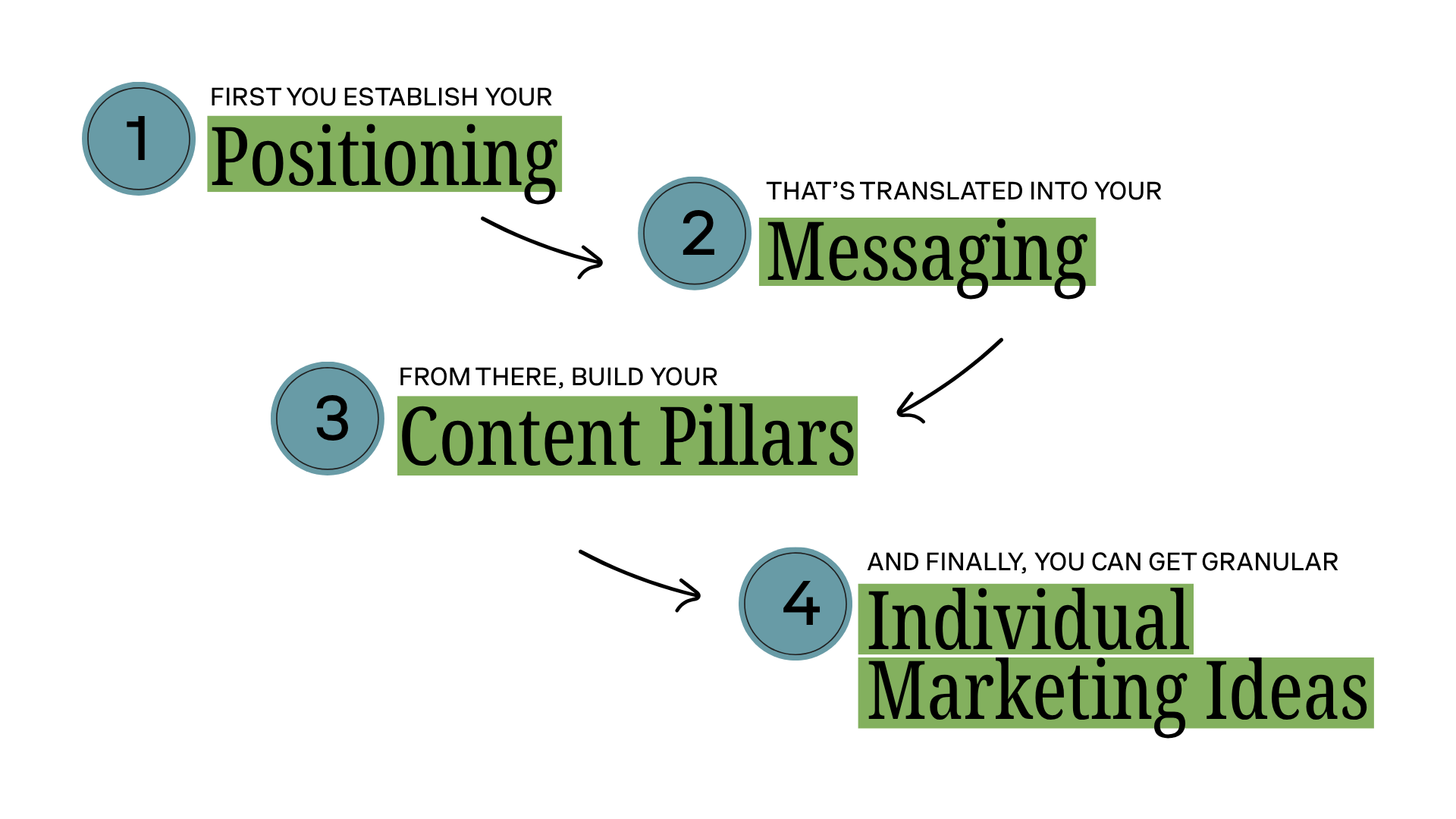
Good brand strategy should leave you with messaging territory: what you want to be known for, your point of view, customer problems, benefits, differentiators, proof.
This messaging can translate into Instagram posts, emails, website copy, ad headlines, Pinterest, and sales conversations. Consistent messaging builds trust with customers, because you sound sure of your business and exactly what you’re about.
3) You and your team stops redesigning everything every time you create something.
Inconsistent Canva graphics are KILLING your feed, I promise. It loses audience trust because it looks low value. Build a consistent visual identity, and translate it into social posts, signage, menus, etc. This doesn’t mean picking ONE Canva template and sticking to it forever - it means being so secure in your brand colours, typography style, and photography direction that you / your team can play with different layouts while still looking and feeling consistent.
Basically, a good brand gives you rules.
Slapping your logo on a social media graphic probably isn’t what you need in order to build trust with your customers.
My clients Instagram feed BEFORE working with me (left) vs. after developing a brand identity (right)


4) Your marketing starts looking like it comes from the same business
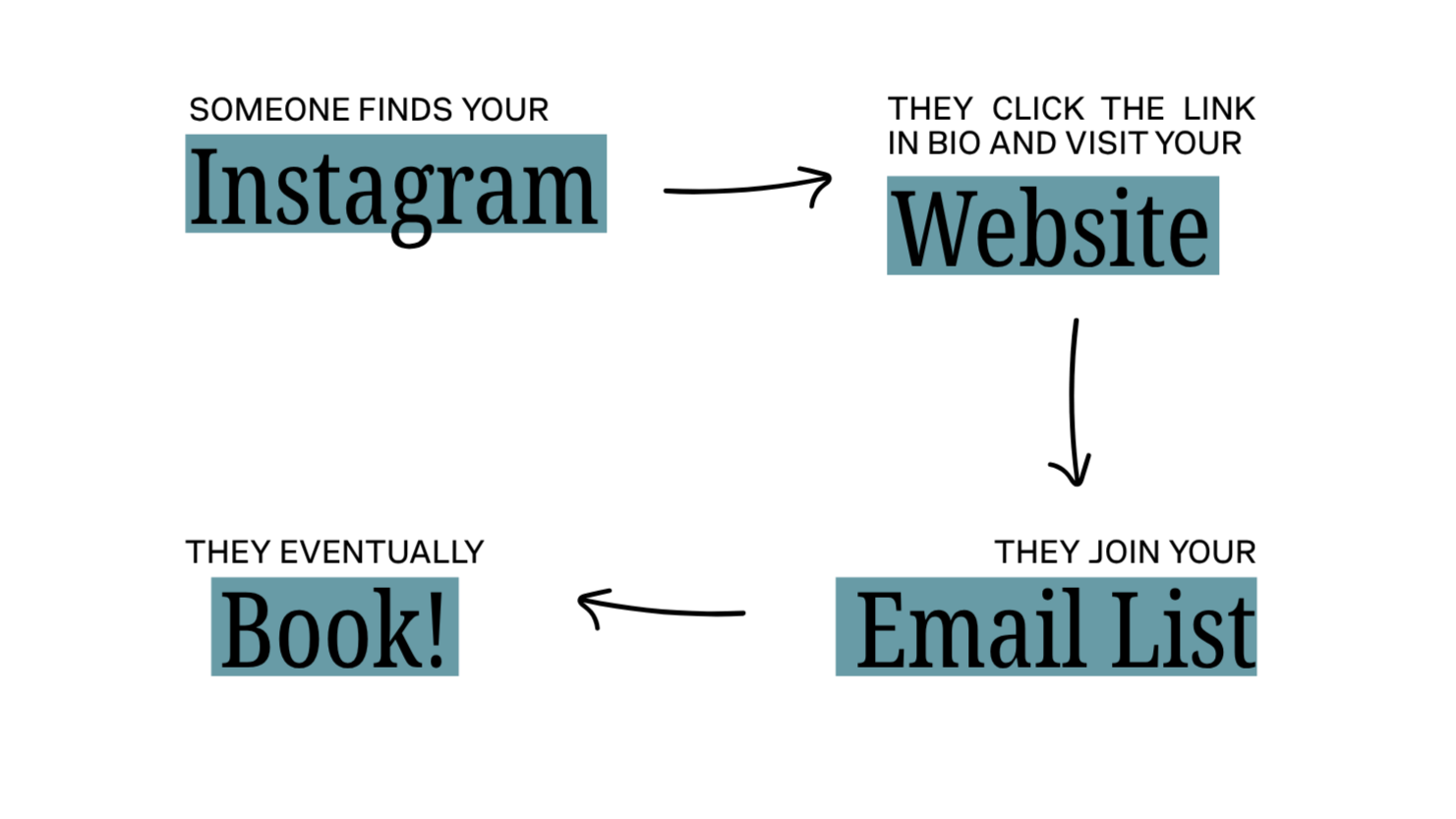
If someone finds your Instagram and clicks the link in your bio, the experience needs to be seamless. If you have a considered Instagram feed but a broken, outdated Wordpress website, then you’re going to lose trust.
Same goes for if someone refers you, but when they visit your website they can’t figure out to book or see proof of other great testimonials, then they probably won’t move forward.
Imagine booking a beautifully designer boutique hotel, and then receiving a confirmation email that looks like it came from a completely different business?
When you have a brand strategy and visuals, translating these into your touchpoints becomes the easy/fun part. These touchpoints support your marketing strategy, so that when a customer…
Sees your Instagram → Googles you → lands on the website → joins your email list →
They eventually book, because everything made sense. You didn’t lose their trust at any point in the flow.
5) You can give better direction to the people you hire
A strong brand makes it easier to brief:
photographers, copywriters, social media managers, web designers, ad agencies, printers, interior designers, etc.
Photography is HUGE - if you book a different photographer every year and let them run with their own style every time, then your brand visuals will look different depending on the photos you use. This can be great when you’re refreshing your brand or working on a new / distinct campaign, but not when it’s a strategy you rely on.
Social media managers are also important. If each new social media manager that you hire has a different aesthetic, then your visuals will become tied to THEM and their taste rather than your brand foundations. This can hurt in the long run, especially when working with new team members.
TLDR: At the end of the day, it’s all about trust.
At the end of the day, at Guestlist we believe that brand strategy and converting customers all comes back to TRUST. Every brand strategy we deliver, visual identity we create, and marketing we support comes back to building and nurturing a foundation of trust. When your visuals are inconsistent and your messaging is erratic, people lose trust in your ability to pick an audience and stick to it. Why would they choose you, when they could choose the one that confidently speaks directly to them?